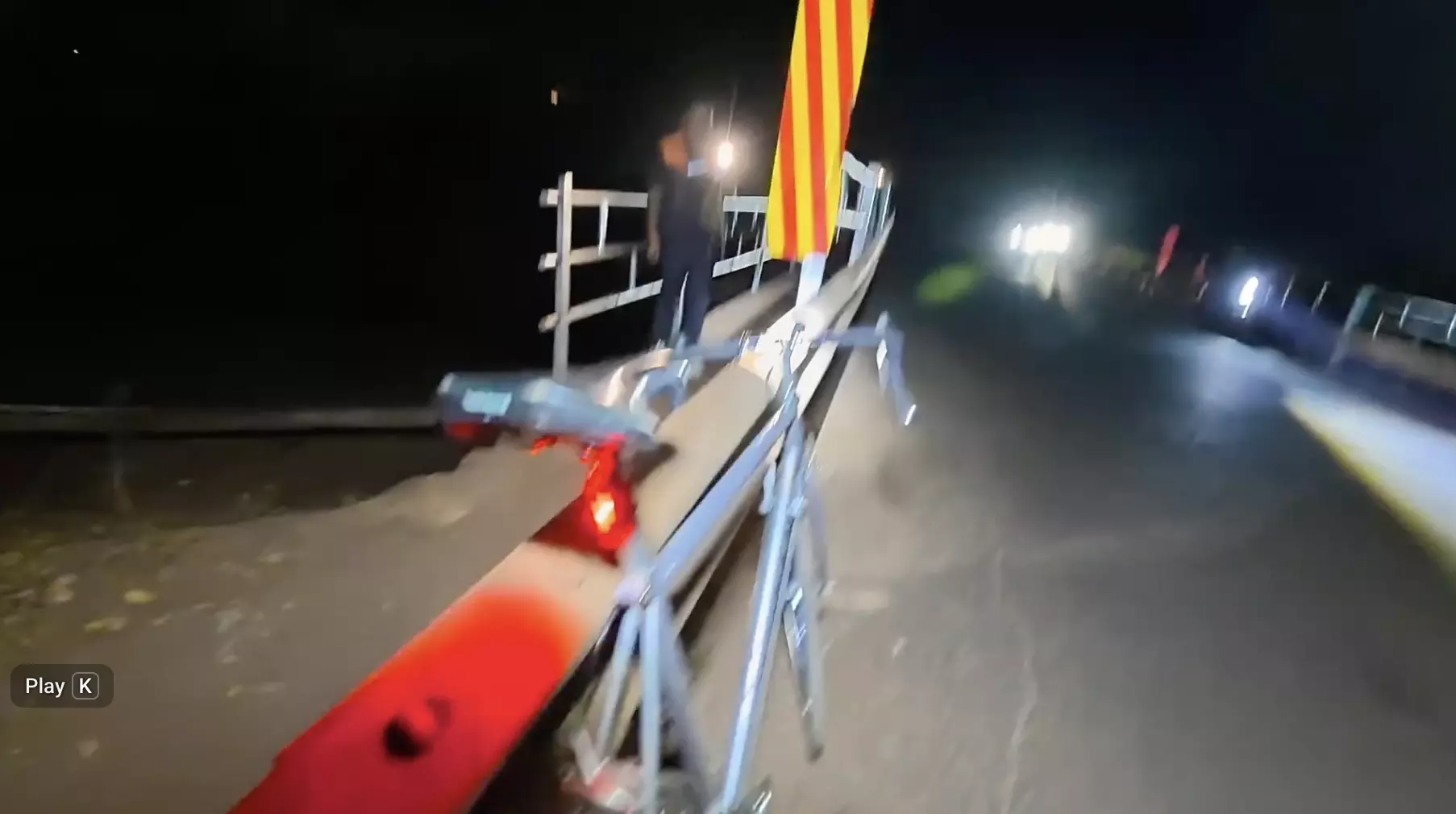
Leg 1Bicycle
777 → Marangu Village
17.25 km · +659 m · −39 m
The opening leg was ridden from the 777 m perimeter base northward along the lower slopes through farmland and coffee estates to Marangu Village.
Kilimanjaro · 7 July 2026 · 777 m to 5,895 m and back
On 7 July 2026, John Rees-Evans completed the first recorded ascent and descent of Kilimanjaro, the world’s largest freestanding mountain, from its true geographic base at 777 m to Uhuru Peak at 5,895 m and back, in 23 hours 58 minutes and 1 second. By bicycle and on foot. Age 48.
The film
Why this record matters · I
Every serious climber knows that a mountain’s character begins at its base, not at whatever boundary a government has drawn across its slopes. Kilimanjaro is no different, yet every speed ascent record has been measured from the park gate: a fence at the forest line that exists for land-tenure reasons, not topographic ones.
The cultivated lower slopes, where coffee, banana and maize grow, are privately owned farmland. The Tanzanian government could not include them within a national park. The park boundary therefore fell where agriculture ended and forest began. That line has since become, by convention, the starting point for every speed attempt.
“Political circumstances shouldn’t define a mountain. Kilimanjaro extends to its perimeter road, and a genuine ascent must begin there.”
A continuous road circumnavigates the entire massif. Roads follow human settlement, and people don’t settle on mountains. That perimeter road is where Kilimanjaro ends and the lowland begins. Geologically, hydrologically and visually, everything inside it is the mountain.
The argument · II
The lowest point on the perimeter road, the true base, sits at 777 m. Uhuru Peak reaches 5,895 m. That is 5,118 m of vertical gain from base to summit, compared with the 4,037 m achievable from Marangu Gate.
The conventional record omits 1,081 metres of real mountain: lower forest, cultivated slope, and the full botanical transition zone of a tropical volcano.
Interactive route
Choose a track to show it on the map with its elevation profile. Run a finger or the pointer along the profile to move the marker on the map; on the actual GPS track it also shows heart rate, pace and time. Tap a line for its details and downloads.
The route
The route divided the mountain into its natural sections, combining bicycle and foot. The return leg via Maua Gate followed the route John reconnoitred on 4 July 2026 to establish the fastest line off the mountain. Tap a leg to see it on the map.
The opening leg was ridden from the 777 m perimeter base northward along the lower slopes through farmland and coffee estates to Marangu Village.
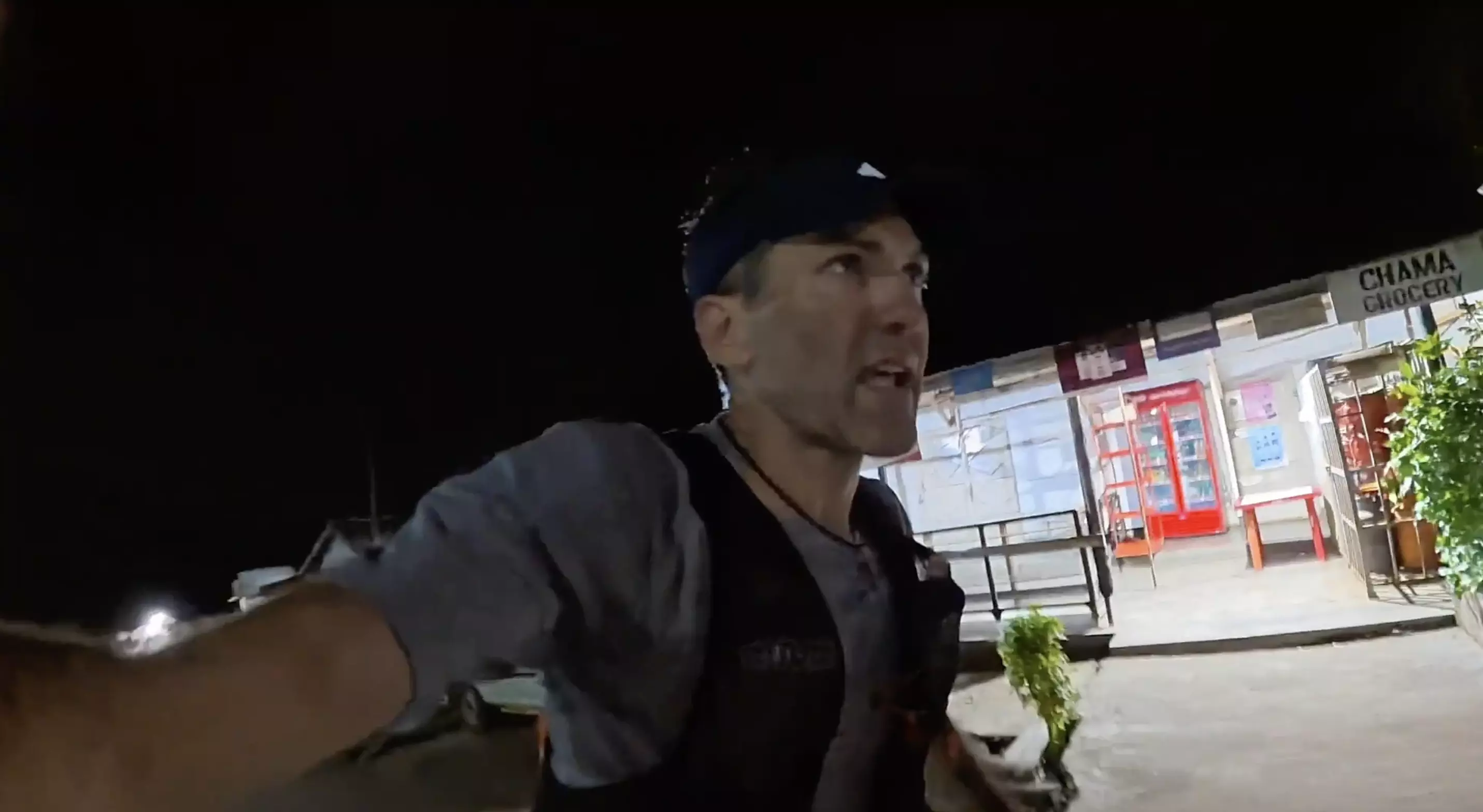
From the village, the route continued on foot up through the forest belt to the park gate, where the bicycle was stored and the mountain proper begins.
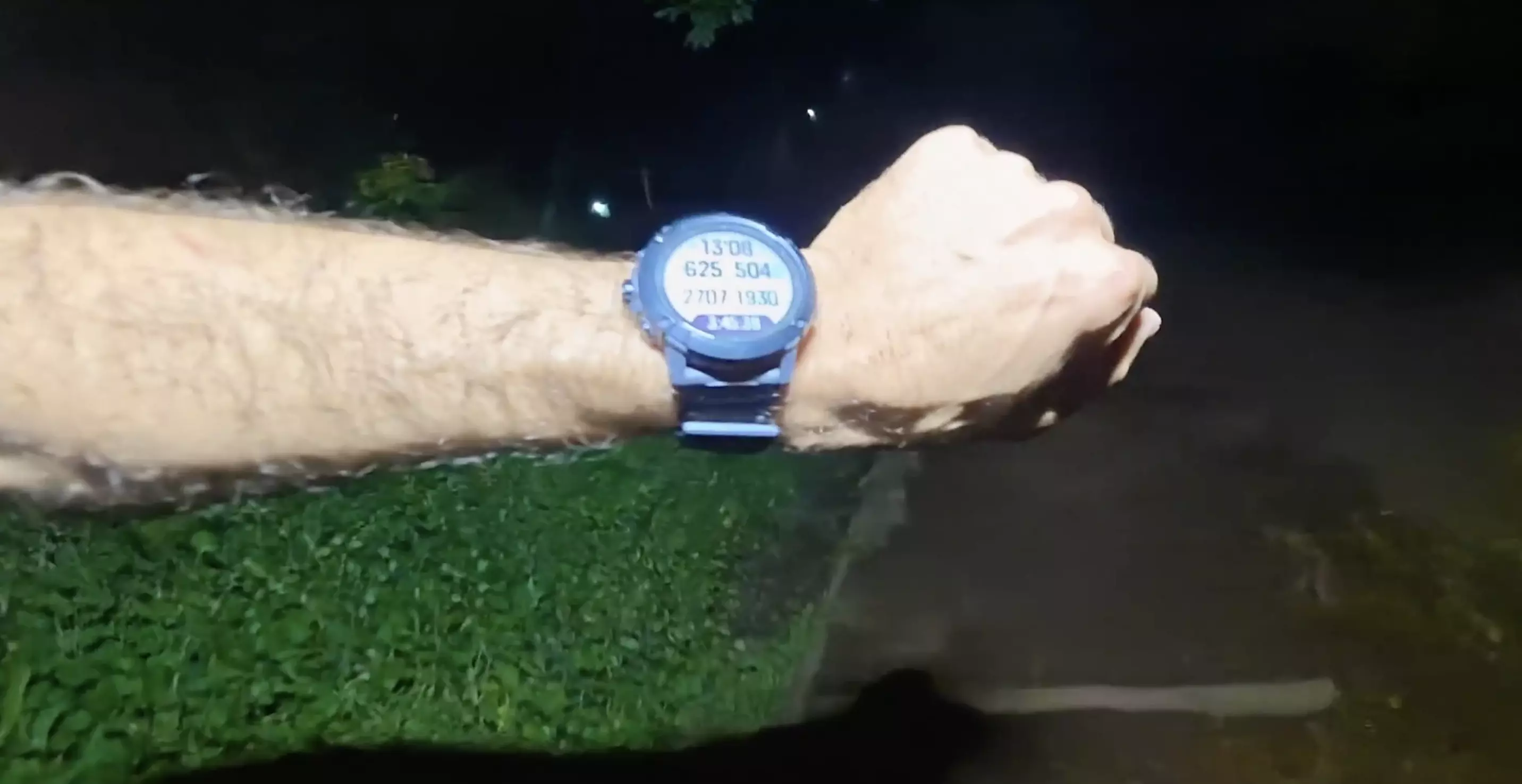
Through the rainforest zone past Maundi Crater to Mandara Hut. Fresh guide at Mandara. Cook stationed at Mandara.
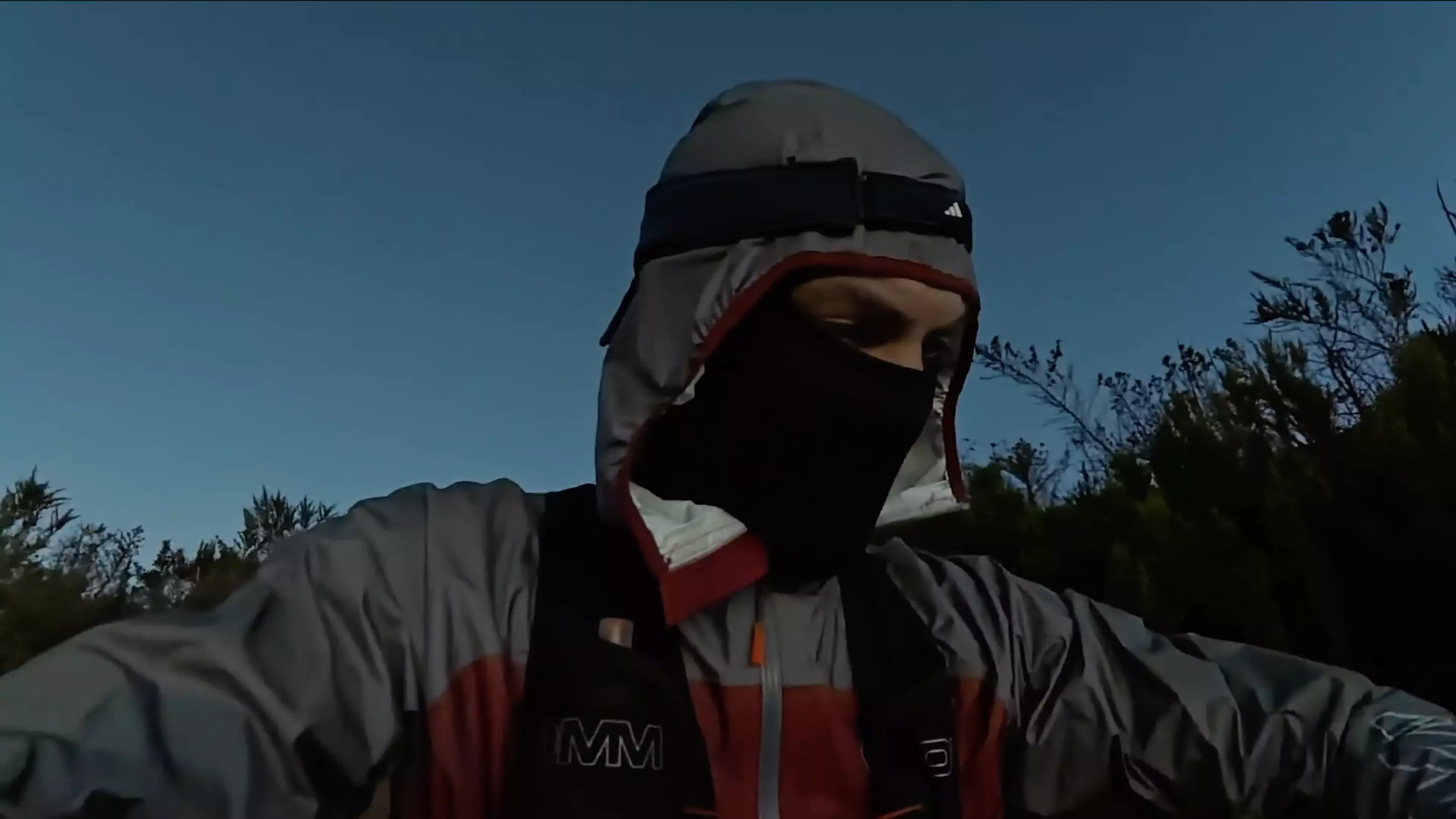
Through the heath and moorland zone to Horombo Hut. Solo. Cook stationed at Horombo.
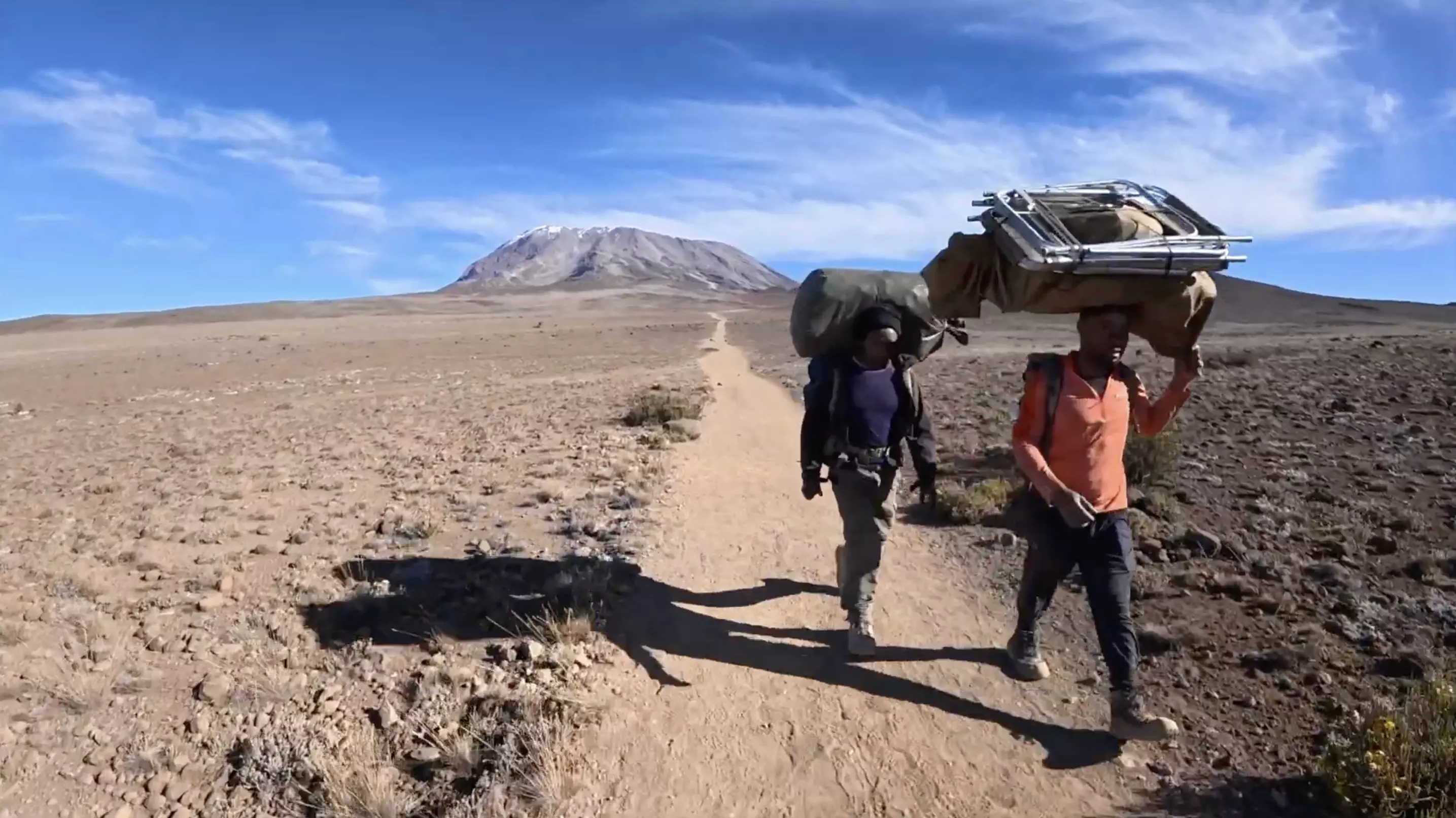
Across the alpine desert saddle to Kibo Hut. Fresh guide at Horombo. Cook at Kibo. Second bicycle pre-staged here for the descent.
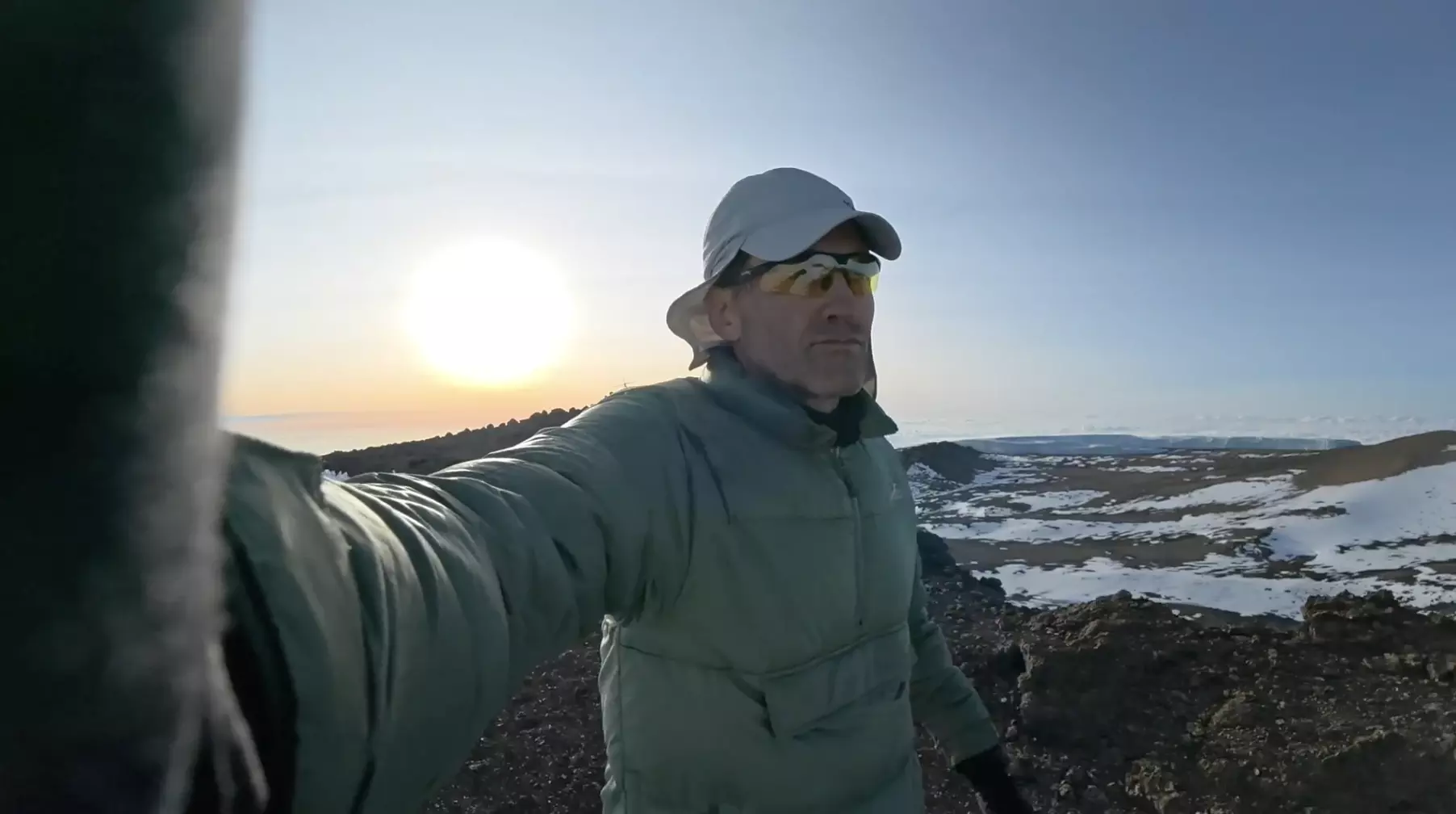
The summit push via Gilman’s Point and Stella Point to Uhuru Peak. Guide 3 to Gilman’s, Guide 4 to the summit.
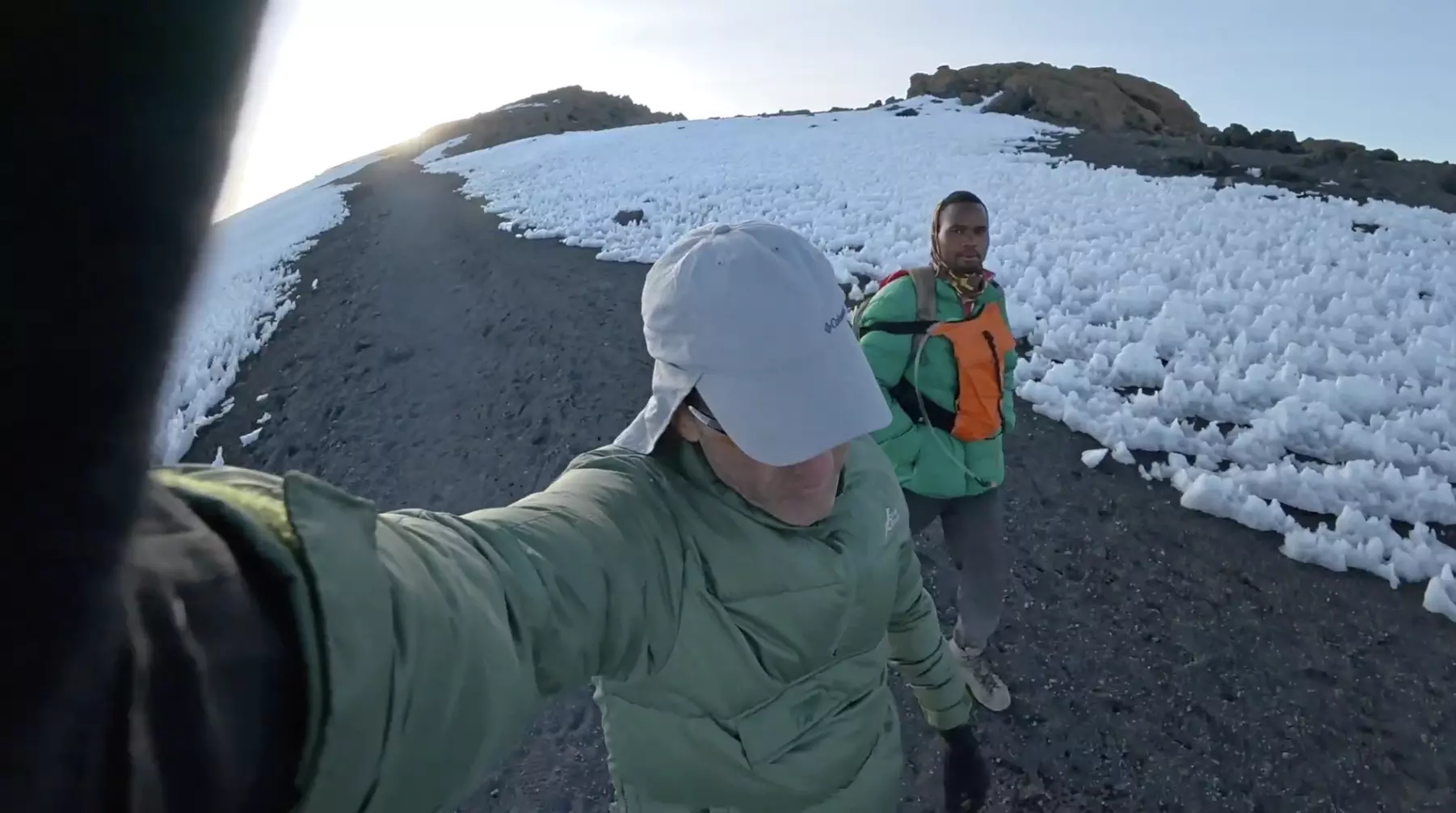
The summit descent back to Kibo Hut where the second bicycle was waiting. Solo descent.
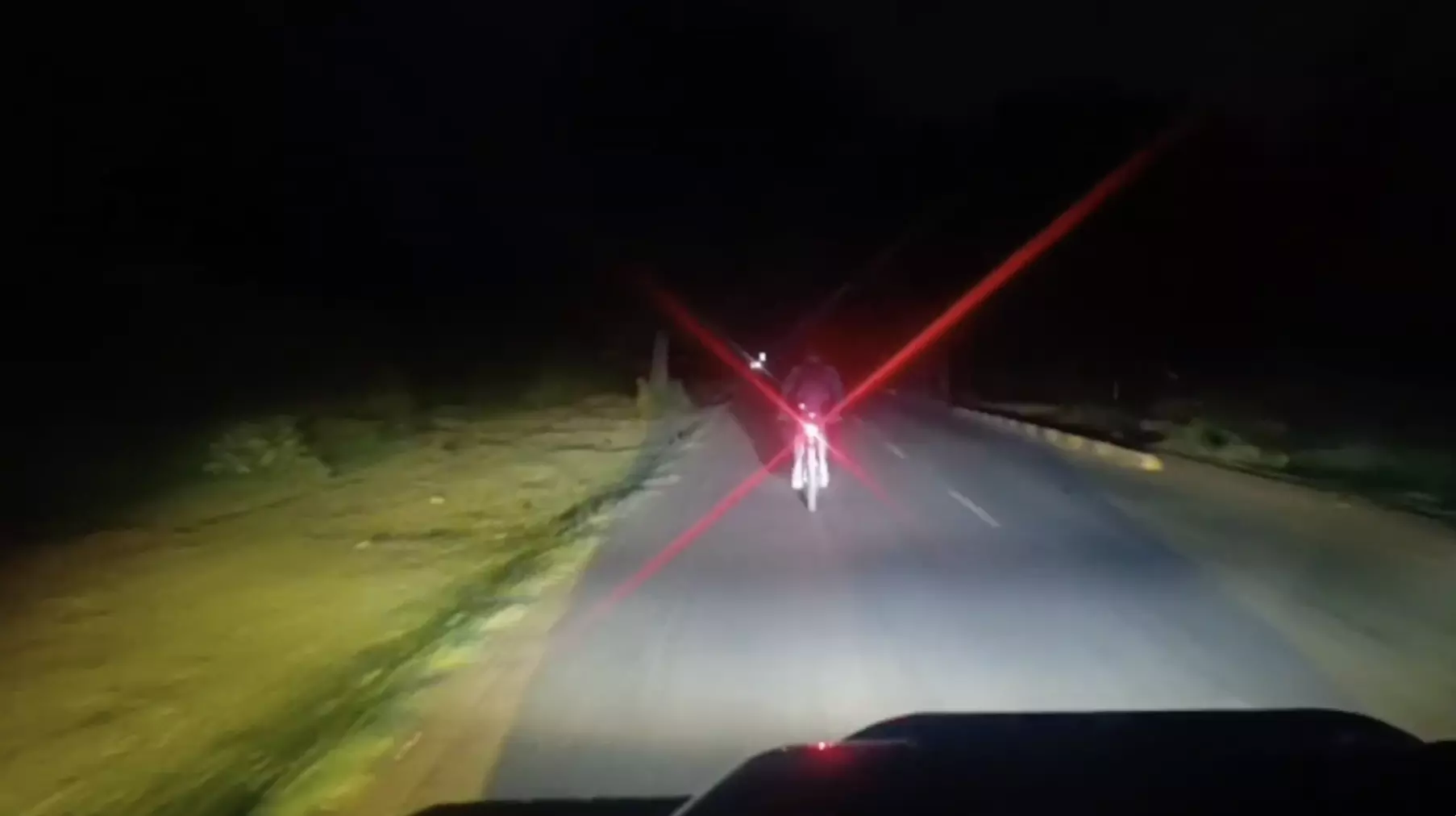
From Kibo Hut, the mountain service road to the junction above Horombo, then right, 15 kilometres to Maua Gate, and the perimeter road south and west back to 777. Route confirmed by John’s reconnoitre of 4 July 2026.
Support team
Fresh guides rotated at key points, cooks were staged at Mandara, Horombo and Kibo, and a second bicycle was pre-positioned at Kibo Hut to enable immediate transition to the descent without delay at altitude.
Context · Ten days later
On 17 July 2026 the same 777-metre point at Mabungo became the start and finish of a second record: once round the perimeter road of the mountain, by bicycle, in fifteen hours, fifty minutes and four seconds. Where this ascent answered how far up does the mountain reach, the circumnavigation answered how far out does it extend.
Companion record · Completed 17 July 2026
Take part
The 777 Summit Challenge is now open to all challengers. The record stands at 23:58:01, set on 7 July 2026 by John Rees-Evans. Team Kilimanjaro provides full logistics, guide support, safety cover and official timing for verified attempts on the complete mountain.